Microneedling
Naturally Rejuvenate Your Skin with Advanced Microneedling
Healthy, glowing skin is something everyone desires, but factors such as aging, acne, sun exposure, pollution, stress, and lifestyle can affect your skin's appearance over time. If you're looking for a safe, non-surgical treatment that improves your skin naturally, Microneedling is one of the most effective options available.
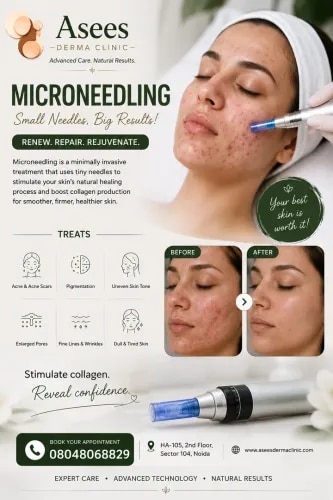
At Asees Derma Clinic, we offer advanced Microneedling Treatment designed to stimulate your skin's natural healing process. The treatment helps improve acne scars, enlarged pores, pigmentation, fine lines, wrinkles, stretch marks, and uneven skin texture while encouraging the production of fresh collagen and elastin.
Unlike treatments that simply cover skin concerns, Microneedling works from within to improve the overall health and quality of your skin, giving you natural-looking and long-lasting results.
What is Microneedling?
Microneedling, also known as Collagen Induction Therapy (CIT), is a minimally invasive dermatological procedure that uses a specialized device with very fine, sterile needles to create tiny controlled micro-channels in the skin.
Although these microscopic punctures are very small, they trigger your body's natural healing response.
As your skin begins repairing itself, it naturally produces:
Collagen
Elastin
New skin cells
These are the building blocks responsible for healthy, smooth, firm, and youthful-looking skin.
Over time, damaged skin is replaced with healthier skin, resulting in visible improvements in texture, tone, and overall appearance.
How Does Microneedling Work?
Our skin naturally loses collagen as we age.
This gradual loss can lead to:
Acne scars
Fine lines
Wrinkles
Enlarged pores
Loose skin
Uneven texture
Dull complexion
Microneedling works by gently stimulating your body's own repair mechanism.
During treatment:
Tiny sterile needles create controlled micro-channels.
Your body recognizes these tiny channels as an opportunity to heal.
Fibroblast cells become active.
New collagen and elastin are produced.
Fresh, healthier skin gradually develops.
The treatment does not remove healthy skin. Instead, it encourages your skin to renew itself naturally.
What Skin Concerns Can Microneedling Treat?
Microneedling is a versatile treatment suitable for a wide range of skin concerns.
Acne Scars
One of the most popular treatments for improving acne scars.
Microneedling stimulates collagen beneath depressed scars, making them appear smoother over time.
Enlarged Pores
By strengthening collagen around pores, Microneedling can improve skin firmness and make pores appear less noticeable.
Fine Lines & Wrinkles
Collagen production helps soften early signs of aging while improving overall skin firmness.
Uneven Skin Texture
Smooths rough skin and improves overall skin quality.
Pigmentation
Can improve certain types of pigmentation and post-inflammatory marks when used as part of a comprehensive treatment plan.
Stretch Marks
Stimulates collagen remodeling to improve the appearance of stretch marks.
Dull Skin
Restores healthier, fresher, and more radiant-looking skin.
Mild Skin Laxity
Improves skin firmness by encouraging collagen formation.
Hair Thinning (Scalp Microneedling)
Microneedling may also be used on the scalp to support hair restoration treatments by enhancing the delivery of topical medications and stimulating the scalp environment.
Benefits of Microneedling
Microneedling offers several advantages because it works with your body's natural healing process.
Some of the benefits include:
Stimulates natural collagen production
Improves skin texture
Reduces acne scars
Softens fine lines
Improves skin firmness
Minimizes enlarged pores
Reduces pigmentation
Brightens dull skin
Improves skin elasticity
Enhances absorption of dermatologist-recommended serums
Suitable for most skin types
Minimal downtime
Natural-looking results
Why is Collagen Important?
Collagen is the structural protein that keeps skin firm, smooth, and youthful.
Unfortunately, collagen production naturally decreases with age.
This can result in:
Wrinkles
Loose skin
Acne scars
Uneven texture
Dull complexion
Microneedling encourages your body to produce new collagen naturally rather than relying solely on temporary cosmetic improvements.
Who is a Good Candidate?
Microneedling may be suitable for individuals who have:
Acne scars
Enlarged pores
Uneven skin texture
Fine lines
Early wrinkles
Mild pigmentation
Stretch marks
Dull skin
Sun-damaged skin
A dermatologist will evaluate your skin to determine whether Microneedling is appropriate for your specific concerns.
Treatment Procedure
At Asees Derma Clinic, every Microneedling session is customized according to your skin condition.
Step 1 – Consultation
Your dermatologist carefully examines your skin and discusses your treatment goals.
Step 2 – Cleansing
The treatment area is thoroughly cleansed to remove makeup, oil, and impurities.
Step 3 – Numbing Cream
A topical anesthetic cream is applied to improve comfort during the procedure.
Step 4 – Microneedling
A medical-grade Microneedling device creates precise micro-channels across the treatment area.
The depth of the needles is adjusted according to your skin condition and treatment goals.
Step 5 – Post-Treatment Care
Depending on your treatment plan, calming serums or growth-factor-based solutions may be applied to support the skin's healing process.
How Long Does the Procedure Take?
A typical Microneedling session usually takes around 45–60 minutes, including preparation time.
The actual treatment generally lasts about 20–30 minutes, depending on the area being treated.
Does Microneedling Hurt?
Most patients tolerate Microneedling well.
Because a numbing cream is applied before the procedure, discomfort is usually mild. You may feel slight pressure or a gentle prickling sensation during treatment.
After the session, the skin may feel similar to a mild sunburn for a short period.
Recovery After Microneedling
Recovery is generally quick.
You may notice:
Mild redness
Slight swelling
Skin tightness
Mild sensitivity
These effects typically improve within 24–72 hours, depending on your skin type and the intensity of the treatment.
Your dermatologist will provide personalized aftercare instructions.
Aftercare Tips
For the best results:
Keep your skin clean.
Apply the recommended moisturizer.
Use a broad-spectrum sunscreen daily.
Avoid direct sun exposure.
Avoid harsh exfoliants for several days.
Do not pick or scratch the skin.
Follow your dermatologist's skincare recommendations.
Proper aftercare supports healing and helps optimize treatment outcomes.
How Many Sessions Are Needed?
The number of sessions varies depending on your skin concerns.
General recommendations include:
Skin Rejuvenation: 3–4 sessions
Acne Scars: 4–6 sessions
Stretch Marks: 4–8 sessions
Hair Restoration: 4–6 sessions (when advised)
Sessions are usually spaced 4–6 weeks apart to allow adequate collagen remodeling between treatments.
Your dermatologist will design a personalized treatment plan based on your individual needs.